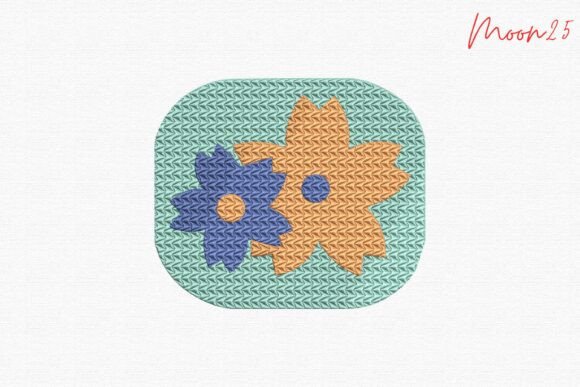
Textured Floral: Elegant & Eye-Catching
First Impression: Premium, Calm, and Confidently Feminine
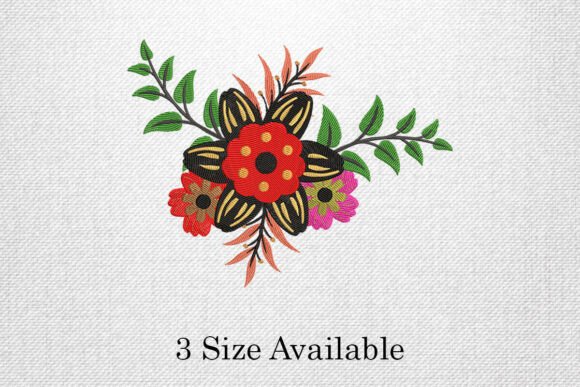
Walking up to my craft fair booth, I want customers to pause—not just glance. Textured Floral delivers that pause. It’s not loud or trendy; it’s quietly confident. Royal blue and golden yellow aren’t clashing here—they’re harmonizing with intention, grounded by that soft green stitched background. The zigzag satin pattern suggests dimension without fussiness. This isn’t farmhouse-cute or minimalist-sterile. It’s elegant—refined enough for a boutique pillow cover, warm enough for a handmade apron, and distinctive enough to stand out in a sea of generic florals. As a designer who’s curated dozens of craft fair displays, I immediately recognize Textured Floral as a premium single-flower embroidery design with strong emotional resonance.
Where It Shines: Craft Fair Product Pairings That Sell
At a busy market, clarity and charm win. Textured Floral works exceptionally well on products where the design reads instantly at arm’s length—and rewards closer inspection.
- Tote bag design: Centered on a natural canvas or oatmeal linen tote, it becomes an instant conversation starter—elegant but approachable. The royal blue pops against neutral fabric; golden yellow catches light beautifully.
- Apron embroidery: Positioned just above the pocket on a dark denim or olive cotton apron, the contrast lifts the whole piece. Customers associate this level of detail with heirloom-quality handmade product.
- Tea towel embroidery: On a tightly woven, medium-weight cotton towel, the textured flowers hold shape and readability—even after repeated washing. Avoid overly plush terry; fabric texture matters.
- Embroidered patch: With clean edges and balanced proportions, Textured Floral converts beautifully into a sew-on or iron-on patch. Perfect for small shop product bundles (e.g., “Floral Patch + Mini Towel Kit”).
- Pillow cover & pouch accents: As a focal motif on a 16”–20” linen pillow or a structured fabric pouch, it adds quiet luxury. Not too busy, not too sparse—it feels intentional.
It’s less ideal on curved surfaces like caps unless resized thoughtfully—tiny flower centers may blur on tight curves. And while it’s lovely on dark fabric, test thread contrast rigorously: royal blue on navy needs extra brightness; golden yellow on charcoal must avoid muddiness.
Real-World Production Notes Every Embroidery Designer Should Check
Before cutting fabric or loading hoops, run these checks—especially if you’re batch-producing for Etsy or craft fairs:
- Test on scrap fabric first. Mimic your final substrate: tea towel weight, apron twill, or tote canvas. Stitch density affects drape and stiffness—zigzag satin can build up quickly.
- Confirm thread colors match your vision. “Royal blue” and “golden yellow” vary across brands. Swatch with your actual threads—especially under natural light.
- Review spacing and balance. Are both flowers equally legible? Does the soft green background stitch evenly without gaps or over-stuffing?
- Verify hoop size compatibility. A design this balanced likely fits standard 4x4 or 5x7 hoops—but always double-check before digitizing or purchasing the embroidery file.
- Choose stabilizer wisely. Medium-weight cutaway works best for dense satin areas; tear-away may shift on textured towels or loosely woven fabrics.
- Create at least one real mockup. A photo of Textured Floral on an actual tea towel—not just a printable mockup—builds trust in your Etsy listing and booth signage.
- Compare fabric colors side-by-side. Royal blue on sage green reads differently than on ivory linen. Small shifts change mood dramatically.
- Confirm commercial licensing. If selling finished products (not just the digital embroidery file), ensure your license permits commercial embroidery use—this is non-negotiable for small shop product integrity.
Selling Smarter: Booth Impact, Online Appeal, and Repeat Value
In person, Textured Floral draws attention without shouting. Its elegance makes it feel giftable—ideal for shoppers seeking handmade gifts with sophistication. On a crowded table, it stands out beside bolder prints or rustic motifs because it offers calm contrast. Paired with matching thread-color palettes (royal, gold, soft green), it strengthens brand consistency across your line—say, a set of embroidered tea towels, aprons, and pouches all sharing the same refined floral language.
Online, it photographs cleanly. The defined shapes and clear color separation mean fewer retakes for your Etsy seller listings. No fuzzy edges, no lost detail—just crisp, inviting imagery. And because it’s a single flowers plants design, it avoids visual fatigue common with all-over patterns. Buyers see it once and remember it: “That beautiful blue-and-gold flower.” That memorability drives repeat engagement.
For batch production? Yes—it’s highly repeatable. No tiny lettering, no micro-details that snag needles or vanish at smaller sizes. It scales gracefully from 3” patches to 8” focal pieces. Just watch stitch density in the flower centers—if they’re overly dense, adjust underlay or reduce fill density to prevent puckering on lightweight fabrics.
Careful-Use Reminders for Best Results
While Textured Floral is versatile, keep these practical limits in mind:
- Avoid using it below 2.5” wide—flower definition softens, and zigzag satin loses its textural punch.
- Don’t force it onto thick, napped fabrics (like heavy fleece or sherpa) without aggressive stabilizing—the background green may sink or distort.
- On highly textured towels (waffle weave, looped terry), expect slight variation in stitch height—test first.
- Curved cap surfaces demand careful placement and possibly minor digitizing tweaks—don’t assume default positioning will work.
- Dark fabric requires high-contrast thread choices—never assume “golden yellow” reads clearly on black without testing.
This isn’t a limitation—it’s guidance. Textured Floral is a thoughtful, mature embroidery design built for makers who value quality over speed. Respect its structure, test with care, and it’ll elevate every craft fair product you bring to market.