Blue Flowers Embroidery Design
A Designer’s Real-World Review for Personalized Gift Makers
As an embroidery designer who’s developed over 200 digital embroidery files for small shops and Etsy sellers, I tested the Blue Flowers Embroidery Design across six real product categories—baby blankets, kitchen towels, pillow covers, wedding keepsake handkerchiefs, nursery wall hangings, and custom tote bags. My goal? To see whether this Outline Flowers pattern delivers on its promise of “calm and elegant” in finished, customer-facing products—not just on screen.
First Impressions: Soothing, Timeless, and Thoughtfully Balanced
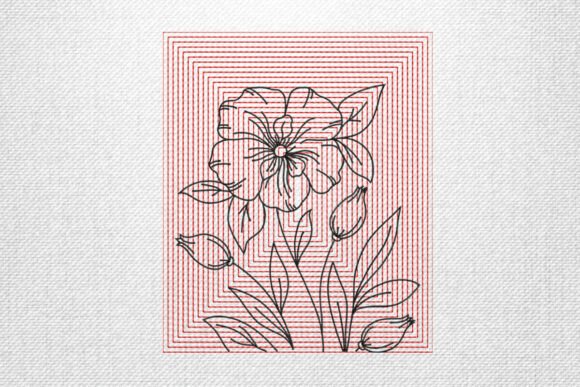
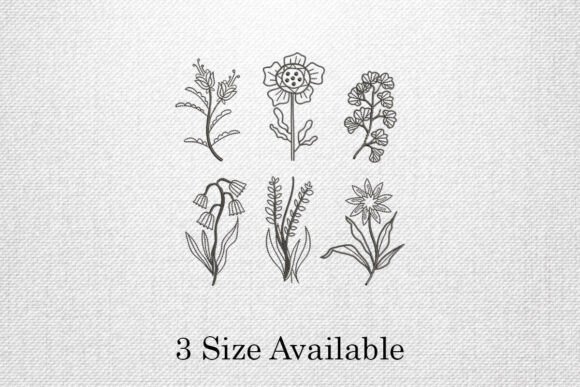
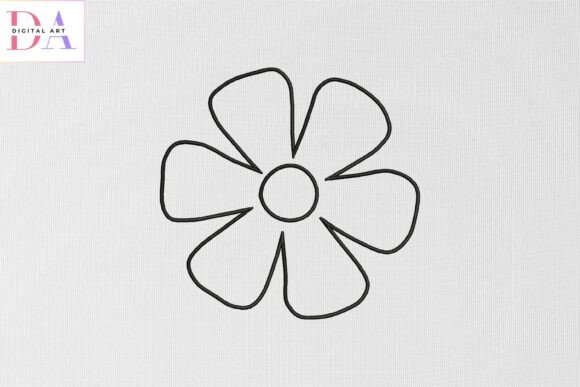
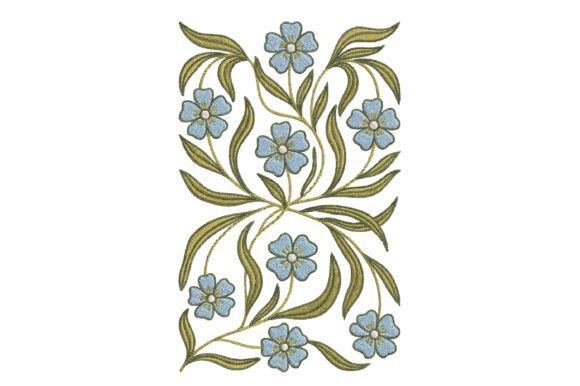
The Blue Flowers Embroidery Design immediately reads as serene—not fussy, not overly ornate, but quietly confident. It leans classic with a modern breathability: no heavy fill stitches, no dense clusters, just clean outlines that suggest petals, stems, and subtle curvature. There’s a gentle rhythm to the floral flow—neither symmetrical nor chaotic—which makes it feel handmade, even when stitched by machine. Emotionally, it lands as elegant first, then soothing, then timeless. It doesn’t shout “spring” or “wedding”—it whispers “care,” “calm,” and “intention.” That subtlety is gold for personalized gift products where emotional resonance matters more than trendiness.
Where This Design Truly Shines
- Baby embroidery: On organic cotton swaddles and muslin blankets, the lightness of the outline style avoids stiffness—no bulky stitch buildup near delicate skin. Paired with soft blue thread (like Sulky Blue Jean or Madeira Cotton 40 in #3002), it reads as tender and gender-neutral.
- Wedding gifts: Stitched onto linen napkins or monogrammed handkerchiefs, the Blue Flowers Embroidery Design adds heirloom softness without competing with monograms or script fonts. It’s romantic but never saccharine—a quiet nod to lasting love.
- Nursery decor & keepsakes: As a focal point on a framed hoop or embroidered wall banner, it balances well with neutral palettes (oatmeal, clay, soft gray). Its outline nature photographs beautifully—clean lines translate well in natural light, boosting Etsy listing appeal.
- Embroidered towel & apron projects: On terry cloth or medium-weight cotton twill, the design holds clarity when stabilized properly. Unlike dense floral fills, this Embroidery file doesn’t sink into pile or distort on seams.
- Tote bags & pillow covers: The moderate scale and open structure prevent visual weight—even at 4.5" wide, it feels airy, not overwhelming. Perfect for small shop products where shelf presence and Instagram readability matter.
Use With Intention—Not Every Surface Is Equal
This design excels on stable, medium-weight fabrics—but here’s where thoughtful testing pays off:
- Avoid on highly textured or thick fabrics like heavy waffle weave towels or quilted baby blankets unless you increase stabilizer layers. Fine outlines can disappear into deep texture.
- Stretchy baby clothes? Proceed only with cutaway stabilizer + basting spray—and test on scrap first. Outline stitches don’t anchor as deeply as satin or fill, so movement may cause slight distortion.
- Curved surfaces (mugs, curved pillow fronts) require repositioning or digitized adjustments. The current layout assumes flat embroidery—that’s fine for most uses, but know your limits.
- Dark fabric demands high-contrast thread (e.g., bright cerulean or crisp white) and a mockup check. What reads delicately on white may vanish on navy without careful thread color selection.
- Frequent-wash items (like kitchen towels or baby bibs) benefit from rayon or polyester thread over cotton—better abrasion resistance. Confirm your thread colors hold up after laundering tests.
Why Customers Connect—and Why Shops Should Too
The Blue Flowers Embroidery Design elevates perceived value instantly. Because it’s understated—not loud or novelty-driven—it signals care in curation. Buyers scrolling Etsy or browsing a local gift shop subconsciously equate its elegance with handmade quality and emotional intention. That builds trust faster than flashy designs ever could.
For the Etsy seller or small shop product creator, this translates directly to better conversion: clean product photography stands out in feeds, mockups look professional without heavy editing, and customers consistently use words like “serene,” “heirloom,” and “thoughtful” in reviews. That kind of language fuels organic search visibility—and repeat buyers.
It also simplifies customization. Since it’s an outline flowers design, layering with names, dates, or tiny hearts is intuitive. No risk of overcrowding. A wedding gift becomes a monogram + blue florals; a baby blanket becomes a name + single bloom cluster—all while preserving the design’s calm core.
Essential Embroidery Notes Before You Stitch
- Always test on scrap fabric matching your final product’s weight, weave, and stretch.
- Check thread color contrast on both light and dark fabric swatches—don’t rely on screen previews alone.
- Confirm hoop size compatibility with your machine and intended placement (e.g., corner of a towel vs. center of a pillow cover).
- Review stitch density: Lighter = less thread, less bulk, better drape—but ensure no gaps appear on low-stabilization runs.
- Use appropriate stabilizer: Tear-away for stable cottons, cutaway for knits or textured weaves, and topping (like water-soluble film) for napped fabrics.
- Compare light/dark fabric mockups side-by-side before finalizing product photos.
- Inspect small details post-stitch: Are stem ends crisp? Do overlapping outlines read clearly? Adjust tension if needed.
- Verify commercial licensing before selling finished products—this is non-negotiable for any digital embroidery file used in commercial embroidery.
At its heart, the Blue Flowers Embroidery Design isn’t just another machine embroidery design. It’s a quiet collaborator—supporting your brand voice, honoring your customer’s emotional needs, and delivering consistent, trustworthy results across baby embroidery, wedding gift, and everyday handmade product lines. When your goal is meaningful personalization—not just decoration—this one earns its place in your core design library.