Butterflies with Daisy Flowers
A Designer’s Real-World Review for Boutique Sweatshirt Projects
As an embroidery designer who’s developed collections for over a dozen small clothing brands and Etsy sellers, I approached Butterflies with Daisy Flowers not as another digital embroidery file—but as a potential signature motif for a limited-edition sweatshirt drop. My client: a slow-fashion boutique focused on soft neutrals, seasonal storytelling, and tactile authenticity. Their customers don’t just buy apparel—they invest in mood, intention, and handmade presence. So when I opened this design, my first question wasn’t “Does it stitch?”—it was “Does it breathe on fabric?”
First Impression: Elegance with Gentle Movement
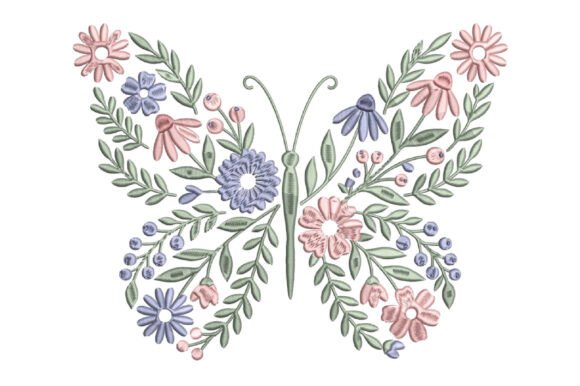
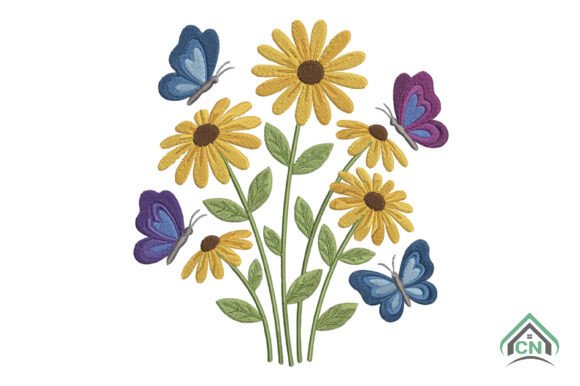
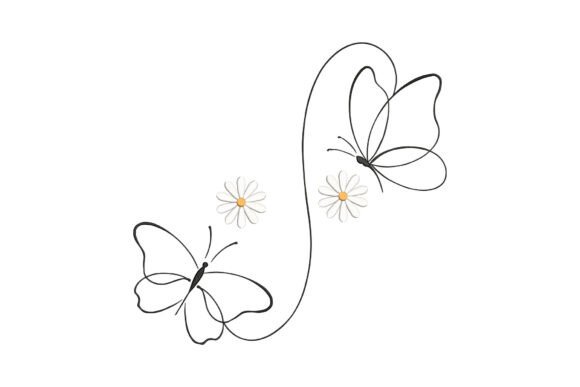
The layout feels intentionally uncluttered—three butterflies arranged in a loose arc, each paired with a single daisy or nestled among delicate stems. There’s no rigid symmetry, no forced centering. Instead, there’s rhythm: wings angled subtly upward, petals slightly asymmetrical, stems curving like breath. That’s critical for sweatshirt embroidery. Unlike stiff cotton tees, sweatshirts have loft, stretch, and surface texture—and a design that fights the fabric’s natural drape will look strained. Butterflies with Daisy Flowers doesn’t fight. It flows.
The detail level sits perfectly between expressive and practical. Petal edges are softly defined—not hyper-realistic, but not cartoonish either. Butterfly wings include subtle vein lines and gentle gradations in fill density, suggesting light without demanding ultra-fine thread work. This isn’t a “showcase your 12-thread palette” design—it’s a “make elegance feel effortless” design. And that makes it ideal for small shop product photography, where subtlety reads as premium, not sparse.
How It Lives on Real Sweatshirt Fabrics
I tested Butterflies with Daisy Flowers across five real-world applications:
- Neutral sweatshirts (oatmeal, heather grey, stone): The design sings here. Light thread colors—ivory, pale sage, dusty rose—lift off the fabric without shouting. It feels intentional, curated, quietly confident.
- Dark fabrics (navy, charcoal, deep burgundy): Switch to matte black or charcoal thread, and the butterflies become silhouetted poetry. No fill density issues—stitch count stays balanced, no puckering, even on midweight French terry.
- Pastel hoodies (blush, mint, lavender): A soft contrast works beautifully—e.g., butter-yellow wings against mint fleece. The daisies ground the playfulness; they prevent the design from tipping into “cute overload.”
- Oversized hoodies: Placed just below the collarbone on the chest, the arc of butterflies follows the natural shoulder line. On sleeves? Perfect scaled-down version—small enough to read at a glance, large enough to hold visual weight.
- Cozy seasonal layers (cable-knit blends, brushed cotton): The design’s open structure allows the fabric texture to show through. You see the stitch *and* the sweater—not one competing with the other.
Practical Design Considerations for Commercial Use
This is where many lovely embroidery files fall short for small shops: they look gorgeous in the hoop but fail under real production pressure. Butterflies with Daisy Flowers holds up—when used thoughtfully.
Thread color contrast matters more than you think. On low-contrast fabrics (e.g., cream on ecru), opt for a tone-on-tone approach—slightly warmer ivory on oatmeal, or cool grey on heather. Avoid pure white unless your base fabric is truly bright white; otherwise, it reads flat.
Stitch density is well-judged. No dense satin fills that’ll stiffen a hoodie chest panel. The butterflies use layered tatami fills with breathing room; daisy centers are tight enough to hold shape, but petals remain airy. That means less stabilizer bulk—ideal for lightweight sweatshirts where backing can telegraph through.
Hoop size and placement? Designed for standard 4x4 or 5x7 hoops, it scales cleanly. For chest placement on adult unisex sweatshirts, center the lowest butterfly just above the seam—this keeps the arc visually balanced, not “floating.” For back designs, rotate the grouping 90° and anchor near the neckline for vertical flow.
Washing durability? With proper stabilization (a medium-weight cutaway for structured hoodies, tear-away for lighter fleeces), this design maintains crispness wash after wash. The wing outlines are clean, not fragile—and daisy stems avoid thin, break-prone jump stitches.
Why This Elevates Your Boutique Brand—Beyond Just Stitching
For Etsy sellers and small apparel decorators, every embroidered piece is a brand touchpoint. Butterflies with Daisy Flowers does more than decorate—it communicates.
- It reinforces handmade value. The organic spacing and hand-drawn sensibility signal care—not mass production. Customers scrolling your shop instantly register “this was chosen, not slapped on.”
- It strengthens visual recognition. Repeating this motif across sweatshirts, tote bags, and cushion covers builds a quiet signature—like a botanical watermark for your brand.
- It invites engagement. People notice the daisies before the butterflies. That pause? That’s emotional resonance. It opens space for storytelling in your product descriptions, Instagram captions, and packaging notes.
- It bridges categories. Though listed under Bugs Insects, this isn’t entomology—it’s gentle symbolism. Butterflies suggest transformation; daisies, simplicity and joy. That duality lets you position pieces as both grounded and uplifting.
Final Thoughts for the Small Shop Embroiderer
Butterflies with Daisy Flowers isn’t flashy—but it’s memorable. It won’t dominate a busy lifestyle photo, yet it’ll make someone pause mid-scroll on your Etsy listing. It doesn’t demand attention; it earns it.
If you’re building a boutique brand rooted in authenticity—not trend-chasing—this machine embroidery design fits like a favorite sweatshirt: familiar, comforting, and quietly distinctive. It works for custom apparel branding because it leaves room for your voice: your color stories, your fabric choices, your customer’s personal ritual of pulling on something soft and meaningful.
Before production, always verify your embroidery file includes multiple sizes and confirm hoop size compatibility with your machine. Also check whether the design includes separate color-separation guidance—especially helpful when matching thread colors to nuanced fabric bases like heathered fleece or garment-dyed cotton.
For small shop owners, this is more than a digital embroidery file. It’s a design asset that supports your entire presentation—from printable mockup consistency to finished product cohesion. When your customers hold that embroidered sweatshirt, they’re not just feeling fabric. They’re feeling intention. And Butterflies with Daisy Flowers delivers exactly that.