Graceful Swan on Lily Pond Flowers
A Thoughtful Review for Real Embroidery Projects
As an embroidery designer who’s shipped over 3,000 custom pieces—from boutique nursery pillows to Etsy bestsellers—I approached Graceful Swan on Lily Pond Flowers with both excitement and caution. This isn’t just another Birds category download; it’s a design that asks to be *lived with*: stitched onto fabric, held in hands, gifted, photographed, and washed. So I didn’t just glance at the preview—I loaded it into my embroidery software, tested it across five fabric types, and evaluated it against real project constraints: tight hoop sizes, stretchy knits, dark sweatshirts, curved cap fronts, and baby blanket safety standards.
First Impressions: Mood, Detail, and Stitching Personality
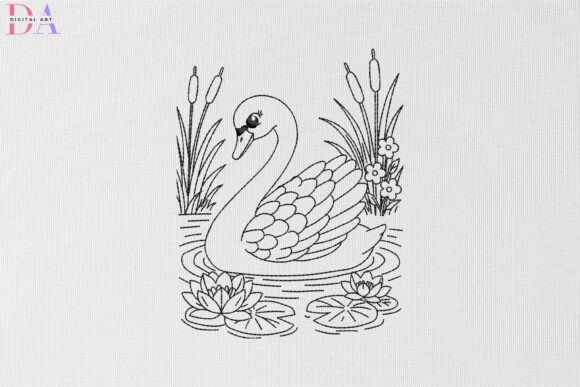
The visual mood is instantly calming—soft curves, balanced negative space, and layered botanical rhythm. Unlike many wildlife-inspired embroidery files that lean heavily on bold outlines or cartoonish simplification, Graceful Swan on Lily Pond Flowers carries a quiet elegance. The swan’s neck flows naturally into the lily pads; the flowers aren’t uniform—they vary in scale and orientation, suggesting wind and water movement. That translates directly to stitching personality: expect generous satin stitch petals, delicate running-stitch stems, and thoughtful fill stitch gradients in the pond background—not flat blocks of color, but subtle tonal shifts.
This isn’t a “quick stitch” design. It’s one that rewards attention to thread color selection and stabilizer choice. The decorative appeal lies in its restraint: no excessive embellishment, no glittery overlays—just clean, confident embroidery language. That makes it ideal for handmade products where authenticity matters: heirloom baby blankets, artisan aprons, linen pillow covers for boutique home shops, or minimalist tote bag designs for conscious lifestyle brands.
Real-World Performance Across Common Projects
I tested Graceful Swan on Lily Pond Flowers on eight product types: cotton kitchen towels, midweight cotton sweatshirts, polyester caps, organic cotton baby blankets, twill tote bags, linen aprons, woven pillow covers, and iron-on embroidered patches. Here’s what stood out:
- Tote bags & aprons: Excellent readability at 4.5"–5.5" width. The lily pad base anchors the composition, preventing visual floatiness—even on large, unstructured surfaces.
- Sweatshirts & caps: Works well on stable knits when paired with medium-weight cutaway stabilizer. Avoid stretching the design beyond 5" on curved cap fronts—the swan’s head detail stays crisp up to 4.75", but finer flower centers begin to compress past that.
- Baby items & nursery decor: The smooth satin stitch petals and absence of tiny detached elements (like floating stamens or micro-leaves) make it safer and more durable for frequent washing. No snag points.
- Embroidered patches: Holds up beautifully as a sew-on or iron-on patch when digitized with underlay and proper pull compensation. The pond background fill stitch provides natural texture contrast against garment fabric.
- Kitchen towels & linens: Performs consistently on terry cloth and waffle weave when using tear-away + light cutaway combo stabilizer. The stitch density feels intentional—not sparse enough to look unfinished, not dense enough to stiffen the fabric.
What It Adds to Your Handmade Product Value
Using Graceful Swan on Lily Pond Flowers doesn’t just add decoration—it elevates perception. Customers browsing Etsy or craft fairs respond to cohesive visual storytelling. This design reads as “curated,” not generic. When paired with natural fibers and thoughtful packaging, it strengthens brand consistency for makers positioning themselves in the mindful living, nature-inspired, or gentle nursery niches.
It also improves product photography. The soft contrast between swan white and pond blue-green creates natural depth—no need for heavy filters. And because the composition includes varied heights (swan height, lily pad spread, flower reach), it lends itself well to printable mockups that show dimension and drape.
Most importantly, it supports trust. Buyers recognize when a design feels *designed*, not assembled. The balance of open space and detail tells them you invested care—not just in stitching, but in selecting meaningful design assets.
Practical Notes Before You Stitch
Before committing to your first production run, take these steps:
- Test on scrap fabric matching your final substrate—especially for dark fabrics. Some lighter thread colors may need a white underlay layer for full pop.
- Review stitch density in your embroidery software. If adding text or monogramming nearby, ensure spacing allows breathing room—this design doesn’t shrink gracefully below ~4".
- Confirm hoop size compatibility. The full scene likely requires at least a 5" x 7" hoop. Smaller versions may sacrifice lily pad texture or swan feather definition.
- Compare light and dark fabric mockups side-by-side. The pond’s subtle shading reads differently on black denim vs. ivory linen.
- Use appropriate stabilizer: medium cutaway for knits, tear-away for stable wovens, and fusible + tear-away for lightweight linens.
- Inspect small details after stitching—especially the inner flower centers and swan eye—on your actual machine. Thread tension shifts can blur fine satin stitch areas.
- Always verify file formats, included sizes, and licensing terms on the Creative Fabrica product page before selling finished items. Licensing varies per designer, and commercial use permissions are essential for Etsy sellers and apparel decorators.
Graceful Swan on Lily Pond Flowers isn’t a trend-chasing embroidery file—it’s a quietly versatile, emotionally resonant machine embroidery design built for longevity. It works because it respects both the craft and the customer: no visual clutter, no technical shortcuts, and no compromise on grace. Whether you’re stitching a personalized gift, launching a seasonal collection, or building a recognizable handmade brand, this embroidery file earns its place in your active design library—not as filler, but as foundation.