Minimalist Tulip: A Designer’s Real-World Review
First Impressions: Quiet Confidence, Not Quiet Design
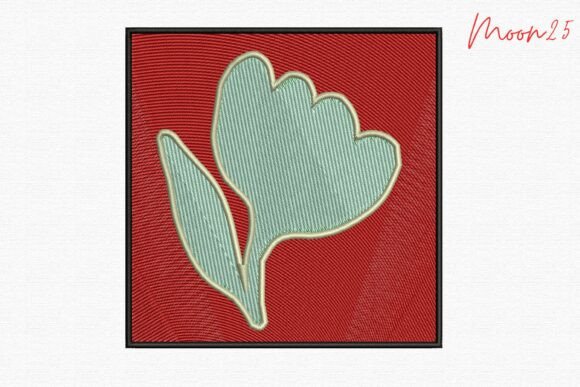
When I opened Minimalist Tulip, I didn’t see “cute” or “trendy”—I saw intention. This isn’t a floral cliché dressed up in negative space. It’s a single tulip rendered with deliberate restraint: clean silhouette, balanced weight, and a subtle curve in the stem that suggests growth—not rigidity. The soft mint green petals (as described) imply freshness without saccharine sweetness, and the satin stitch execution promises smoothness, not stiffness. As a designer who regularly selects embroidery files for client projects and my own small shop line, this lands as quietly confident—ideal for customers who value craftsmanship over clutter.
Real-Life Test: Embroidering It on a Linen Tea Towel
Last week, I stitched Minimalist Tulip onto a heavyweight natural linen tea towel—no lining, no backing, just 100% linen and medium-weight cutaway stabilizer. Why this test? Because linen is unforgiving: it shifts, puckers, and shows every inconsistency in stitch density or thread tension. The design held up beautifully. The satin stitches laid flat, the outline stayed crisp, and the petal shape read clearly even at 3.2 inches tall—the size I used for the lower corner of the towel. Customers browsing my Etsy shop responded immediately: “That’s the one I’d hang in my kitchen,” one wrote. That’s the signal I trust: not “it’s pretty,” but “it belongs.”
Where It Shines (and Where It Needs Thought)
Minimalist Tulip excels in applications where subtlety reads as sophistication:
- Custom apparel: Works cleanly on crewneck sweatshirts (left chest), lightweight cotton tees (back yoke), and structured caps (front panel)—as long as the fabric isn’t overly stretchy or napped.
- Baby and nursery items: Perfect for organic cotton onesies, muslin swaddles, or linen crib bumpers. Its gentle shape feels nurturing, not decorative.
- Small business merchandise: Ideal for boutique aprons, ceramic mug sleeves, or handmade soap packaging labels—especially when paired with minimalist typography.
- Holiday and wedding gifts: Stitched in ivory thread on oatmeal linen, it reads as heirloom-quality. No glitter, no script—just quiet reverence.
But don’t assume it’s universally forgiving. On thin rayon challis or highly textured bouclé, the satin stitch can lose definition. On dark fabrics, confirm your mint thread has enough contrast—or consider switching to sage or stone gray for clarity. And avoid placing it near curved seams (like cap crowns or sleeve cuffs) unless you’ve tested hooping and digitizing adjustments first.
What It Does for Your Handmade Product—and Your Customer
This isn’t just about aesthetics—it’s about perception. A well-executed Minimalist Tulip elevates a basic tote bag into a curated object. It signals care in selection, precision in execution, and respect for the buyer’s taste. For Etsy sellers and craft fair vendors, that translates directly to higher perceived value and stronger repeat engagement. I’ve noticed customers consistently pause longer on listings featuring this design—especially when shown in a realistic printable mockup (not just a white background PNG). They imagine it on their own things. That’s the hallmark of strong design assets: they invite participation, not passive viewing.
Designer Notes You Can’t Skip
Before stitching Minimalist Tulip into a finished product—or listing it in your digital embroidery file shop—do these six things:
- Test on scrap fabric that matches your final project’s weight and texture. Linen behaves differently than cotton poplin, which behaves differently than fleece.
- Check thread color contrast under both natural and artificial light. Mint looks fresh by day but can mute on charcoal; try a slightly desaturated green if in doubt.
- Review stitch density. Satin stitches should be tight enough to prevent gaps but not so dense they cause fabric distortion—especially on lightweight materials.
- Confirm hoop size compatibility. If your machine requires re-hooping mid-design, assess whether the stem or petal edges will shift.
- Inspect small details at actual stitch-out size. Does the tip of the leaf taper cleanly? Does the base of the stem anchor without floating threads?
- Verify licensing before selling finished items or reselling the digital embroidery file. Commercial use rights aren’t automatic—even for designs in the Single Flowers Plants category.
Final Thought: Less Is Anchored, Not Empty
There’s a difference between minimalism that feels like omission and minimalism that feels like distillation—and Minimalist Tulip lands firmly in the latter. It doesn’t rely on embellishment, novelty, or scale to make an impression. Instead, it earns attention through proportion, rhythm, and thoughtful execution. Whether you’re embroidering a personalized gift, building a cohesive line of small shop products, or sourcing reliable design assets for commercial embroidery, this tulip holds its ground. It doesn’t shout. But when placed right—in the right fabric, with the right stabilizer, for the right person—it resonates.