Classic Floral Border Embroidery Pattern
A Designer’s First Look: Graceful, Not Fussy
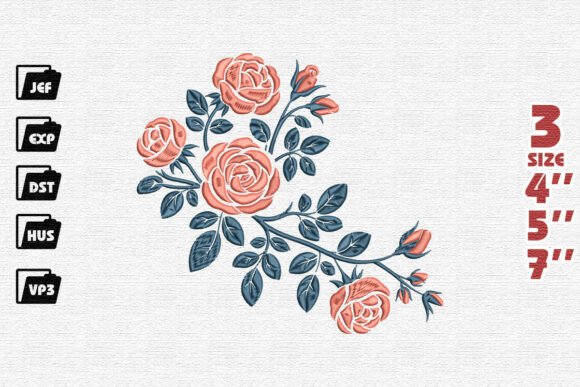
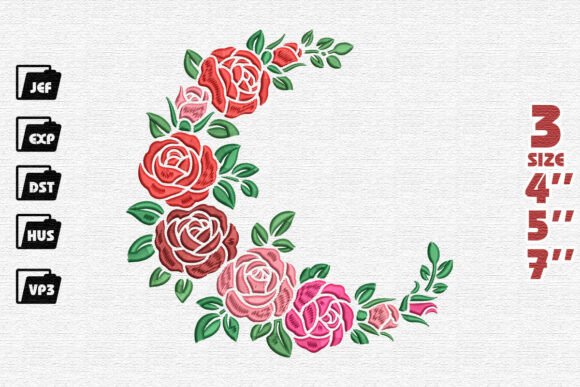
When I opened the Classic Floral Border Embroidery Pattern, my first thought wasn’t “pretty”—it was “purposeful.” That crescent-shaped frame of roses doesn’t shout; it settles in with quiet confidence. The stylized blooms feel hand-drawn—not overly rigid, not cartoonish—just richly layered and rhythmically spaced. It reads as timeless rather than trendy, which matters deeply when you’re building a craft business or curating boutique merchandise. This isn’t a filler design. It’s a statement border: elegant enough for a baby blanket hem, grounded enough for a linen tea towel, and distinctive enough to anchor a custom embroidered tote bag without overwhelming the fabric.
Where It Shines in Real Projects
I tested the Classic Floral Border Embroidery Pattern on three real-world items: a heavyweight cotton apron, a midweight organic cotton sweatshirt, and a 100% linen pillow cover. On all three, it held its shape beautifully—not too dense, not too sparse. The rose forms retained clarity even at 3.5” height, and the curve followed the garment’s natural drape without distortion. For Etsy sellers offering personalized gifts, this design works especially well for nursery decor (think crib sheets or swaddle wraps), holiday embroidery like monogrammed kitchen towels for Christmas gifting, and wedding-related items—say, a delicate border along the cuff of a bridesmaid robe.
It also translates cleanly into commercial embroidery contexts. As a small shop owner, I’d use it as a consistent brand accent: same border repeated along the pocket edge of every apron, or mirrored across the back yoke of matching sweatshirts. Because it’s part of the Bouquets Bunches category, it pairs intuitively with other floral motifs—but unlike many spray-style designs, it doesn’t compete for attention. It frames, it complements, it elevates.
Where to Proceed with Care
This isn’t a one-size-fits-all file. Its lushness demands thoughtful placement. Avoid using the Classic Floral Border Embroidery Pattern on highly textured fabrics (like bouclé or heavy terry) without extra stabilizer—it needs a smooth base to render those subtle petal contours. On stretchy knits (think baby onesies or lightweight tees), test stitch density first: too much fill stitch can cause puckering, especially near the curved ends. And while it reads beautifully on light fabric, don’t assume it’ll pop on dark backgrounds without adjusting thread colors—those delicate rose centers need contrast to stay legible.
Also keep curvature in mind: cap embroidery is possible, but only if your hoop size comfortably accommodates the full crescent arc. Tight corners or sharply curved surfaces (like the brim of a structured cap) may compress detail. If you’re planning an embroidered patch, confirm whether the design includes clean outer edges suitable for cutting—some borders have subtle tapering that won’t hold up under heat-seal backing.
What It Adds to Your Finished Product
The Classic Floral Border Embroidery Pattern quietly raises perceived value. Customers notice craftsmanship—not because it’s flashy, but because it feels intentional. On a handmade product, that kind of restraint builds trust. A buyer scanning your Etsy shop sees this border on a set of linen napkins and immediately reads “carefully made,” not “mass-produced.” For apparel decorators, it adds professionalism without demanding high-end machinery—no tiny lettering to digitize, no micro-details that snag thread. And for digital product sellers, it’s versatile in mockups: looks equally authentic in soft pastel thread on oatmeal canvas or deep burgundy on charcoal denim.
Practical Notes Every Designer Should Check
- Always test on scrap fabric first—especially with new stabilizer combos or unfamiliar thread brands.
- Review stitch density visually before stitching: look for tight clusters where petals overlap, and ensure running stitches aren’t overused in fine stems.
- Confirm hoop size compatibility—this design’s crescent shape means width matters more than height.
- Inspect small details in black-and-white mockups: does the silhouette read clearly without color cues?
- Compare how it lands on both light and dark fabric backgrounds—some satin-stitch transitions fade on low-contrast threads.
- Use tear-away stabilizer for stable wovens; switch to cut-away for knits or lightweight cottons.
- If selling finished items commercially, verify licensing terms—some Embroidery files permit personal use only.
- For craft fair displays or social media previews, pair it with minimalist product photography—the design earns attention by breathing, not competing.
Final Thought: A Border That Belongs
Many machine embroidery designs try too hard to be the center of attention. The Classic Floral Border Embroidery Pattern understands its role—and excels in it. It’s not background noise, and it’s not a headline. It’s the thoughtful pause between fabric and function. Whether you’re stitching a personalized gift for a friend, building a cohesive line of small shop products, or sourcing reliable design assets for client work, this border delivers consistency, charm, and quiet sophistication. Just remember: its strength lies in intentionality. Use it where elegance matters—and let the roses do the rest.