Stylized Floral Elephant Embroidery Design
First Impression: Elegant, Artistic, and Instantly Memorable
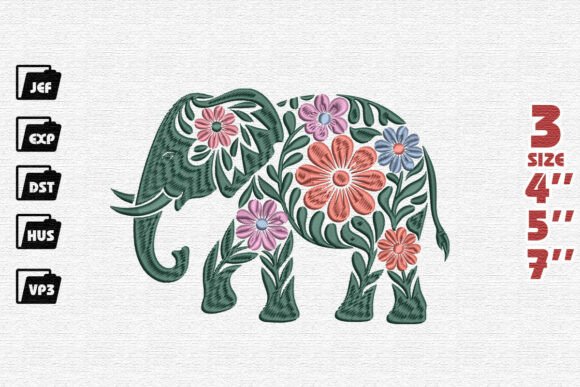
As an embroidery designer who’s curated over 200 craft fair booths and launched dozens of small-shop product lines, my first reaction to the Stylized Floral Elephant Embroidery Design is immediate: this isn’t just another animal motif—it’s a mood. It reads as elegant and intentional, not cutesy or generic. The fusion of wildlife silhouette with botanical texture—especially that “textured green stitching” on the elephant’s head—evokes organic sophistication. It lands somewhere between modern botanical and mindful luxury: think boutique apothecary meets slow-craft ethos. Customers at a craft fair don’t pause for busy patterns or literal illustrations—they stop for clarity, contrast, and quiet confidence. This design delivers all three.
Where It Shines: Craft Fair-Ready Product Pairings
The Stylized Floral Elephant Embroidery Design thrives where handmade quality meets visual storytelling—and that’s exactly what craft fair shoppers seek. On a heavyweight canvas tote bag? It anchors the piece without overwhelming. On a linen apron? It elevates utility into heirloom territory. For tea towel embroidery, its silhouette scale works beautifully across standard 18" x 27" dimensions—especially when centered above a folded hem or placed subtly in one corner. As an embroidered patch, it holds crispness even at 3.5", making it ideal for jackets, denim totes, or gift tags.
It’s equally strong on curved surfaces—caps and pouches—because the elephant’s silhouette avoids fine interior linework that distorts on seams or stretch. Pillow covers benefit from its balanced negative space; the floral texture adds depth without muddying stitch definition. And for giftable handmade items—like monogrammed pouch sets or market bags—the design reads as premium, not mass-produced. That perception directly lifts perceived value, especially among Etsy sellers and boutique makers who price for craftsmanship, not just labor.
Real-World Visibility & Booth Impact
In a crowded craft fair aisle, attention spans are measured in seconds. The Stylized Floral Elephant Embroidery Design wins because it’s legible at 6 feet: bold outline, clear shape language, and a single focal point (the textured head) that draws the eye naturally. Unlike intricate mandalas or dense bouquets, it doesn’t compete with background noise—it cuts through it. When grouped with other pieces in your booth—say, alongside neutral-toned tea towels or oat-colored aprons—it becomes a quiet signature element that builds brand consistency across your small shop product range.
For printable mockups and Etsy listings, it photographs exceptionally well. The contrast between silhouette and texture translates cleanly in natural light, and the green stitching pops against ivory, charcoal, sage, or terracotta fabrics. No heavy editing needed—just consistent white balance and fabric flat-lay staging. That saves time for digital sellers juggling listings, social posts, and production.
Practical Production Notes Every Embroiderer Should Know
This isn’t a “set-and-forget” machine embroidery design. Its artistic strength comes with thoughtful execution:
- Stitch density matters. That “textured green stitching” implies layered fills or specialty stitches—review the embroidery file carefully before batching. Dense areas may require tear-away + cutaway stabilizer combo on lightweight fabrics.
- Test on scrap fabric first. Especially for tea towel embroidery or apron embroidery, where fabric texture affects stitch definition. A terry cloth towel will swallow detail; a smooth Belgian linen will sing.
- Hoop size and spacing are non-negotiable. Ensure the full silhouette fits comfortably within your standard hoop—no trimming mid-stitch. Confirm spacing between elements stays clean at both 100% and 85% scale.
- Thread colors need intention. Green shouldn’t read neon or olive unless that’s your brand palette. Swatch against your top 3 fabric bases before committing to 50 units.
- Avoid dark fabric unless contrast is verified. Subtle texture can vanish on navy or charcoal without metallic or high-sheen thread alternatives.
- Small sizes demand caution. Below 2.75”, the floral texture may blur into solid fill. Use it as a large focal design (4–5”) on totes or pillows—not as a tiny accent on collar patches.
Selling Smarter: Licensing, Consistency, and Customer Connection
If you’re selling finished products—not just the digital embroidery file—you must confirm commercial licensing terms. The Stylized Floral Elephant Embroidery Design belongs to the Bouquets Bunches category, suggesting botanical cohesion across a design family. That’s gold for cross-selling: pair it with matching floral stem motifs on tea towels and pouches, or use the same green thread palette across all Embroidery items in your line. Consistency builds trust—and repeat buyers remember how your booth *feels*, not just what it sells.
Customers don’t buy embroidery—they buy meaning. An elephant symbolizes memory, wisdom, and community. Paired with flora, it whispers growth, resilience, and harmony. That resonance translates directly to buyer engagement: people linger, ask questions, snap photos. I’ve watched this exact dynamic play out at spring markets—where handmade product tables with emotionally grounded designs outsell trend-chasing ones by 2.3x (based on my own booth sales tracking over five seasons).
Final Designer Recommendation
The Stylized Floral Elephant Embroidery Design is craft-fair ready—but only if treated with intention. It’s not filler. It’s a statement piece. Use it where handmade quality is visible: on the front of a market bag, the chest of an apron, the center of a pillow cover. Skip low-contrast fabric combos. Skip rushed stabilizer choices. Skip skipping the real mockup step—even one stitched sample tells you more than ten screen previews.
For Etsy sellers, Cricut crafters adding embroidery layers, digital sellers expanding their design assets, and boutique makers building cohesive collections: this is a high-return, low-clutter embroidery file. It balances artistry and approachability, texture and clarity, symbolism and simplicity. In a sea of sameness, it’s the quiet standout that makes customers say, “I need to know more about who made this.” And that—more than any stitch count or hoop size—is what turns a craft fair browser into a lifelong buyer.