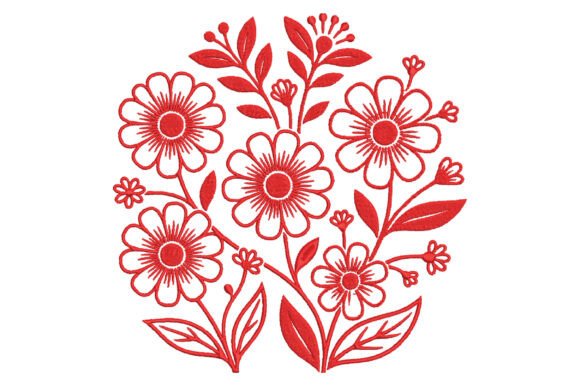
Flowers Embroidery Design
A Designer’s First Look: Delicate, Balanced, and Quietly Confident
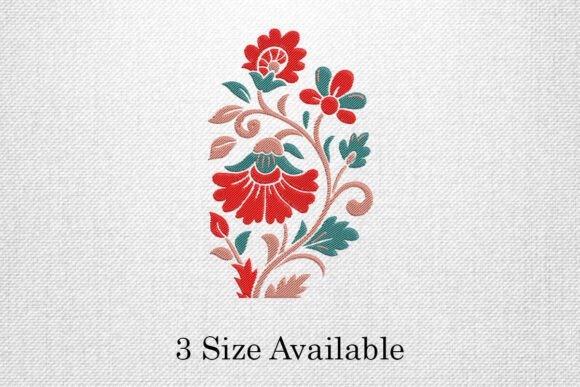
When I opened the Flowers Embroidery Design file for the first time, I didn’t see “wedding” or “floral”—I saw rhythm. The arrangement breathes: petals curve outward without crowding, stems flow with subtle weight, and negative space is treated like part of the composition—not an afterthought. This isn’t a dense bouquet screaming for attention. It’s a quiet, confident line-art floral that leans into elegance over exuberance. That makes it unusually versatile: equally at home on a linen tea towel for a bridal shower gift as it is on a minimalist sweatshirt for a small-batch apparel brand.
Real-World Test: Stitching It onto a Linen Tote Bag for a Boutique Launch
Last week, I used Flowers Embroidery Design to finish a set of custom tote bags for a local florist’s pop-up shop—part wedding prep, part everyday branding. I chose medium-weight natural linen, a tear-away + cut-away stabilizer combo, and soft cotton thread in sage and ivory. The result? Clean satin stitch outlines held their shape beautifully along curved petal edges, while the fill stitch areas stayed breathable—not stiff or plasticky. Customers commented not just on how “pretty” it was, but how “handmade” and “intentional” it felt. That’s the difference between decoration and design: Flowers Embroidery Design supports the product instead of competing with it.
Where It Shines (and Where It Asks for Care)
This machine embroidery design thrives where subtlety matters:
- Custom apparel: Works exceptionally well on sweatshirt cuffs, back yokes, or chest pockets—especially when you want texture without bulk.
- Baby embroidery: Its open layout avoids heavy fill areas, making it ideal for onesies and burp cloths where softness and washability are non-negotiable.
- Embroidered patch: Clean lines translate cleanly to twill or felt backing; no detail vanishes at 2–3 inches wide.
- Tote bag design and aprons: Scales gracefully from 3.5" to 5"—no pixelation or awkward stretching.
- Holiday embroidery and personalized gifts: Feels timeless, not seasonal—just as fitting for a spring baby shower as a winter wedding favor.
But it’s not magic. Use caution on:
- Thin or highly stretchy fabric (like lightweight jersey) without proper stabilization—delicate stems can distort.
- Dark fabric without testing thread contrast first—the line art relies on clarity, not saturation.
- Curved surfaces like caps or baby hats unless you confirm hoop size compatibility and adjust tension.
- Products requiring frequent washing (e.g., kitchen towels): review stitch density. If fill areas feel overly dense, consider lightening the underlay or reducing density in your editing software.
What It Adds to Your Finished Product—Beyond Aesthetics
Flowers Embroidery Design quietly elevates perceived value. On an Etsy listing, it transforms a generic cotton pillow cover into something customers describe as “heirloom-quality.” For craft business owners, it reinforces brand consistency—think cohesive nursery decor sets or matching boutique staff aprons. And for handmade product sellers, its balanced scale and restrained detail signal professionalism without sacrificing warmth. I’ve watched buyers linger longer on listings using this design—not because it’s flashy, but because it feels *considered*. That builds trust, especially for personalized gift buyers who care about longevity and tactile quality.
Practical Notes Every Embroidery Designer Should Check
Before stitching—or listing your finished product—take these steps:
- Test on scrap fabric first, using your exact stabilizer, thread, and machine settings. Linen behaves differently than cotton duck or fleece.
- Review stitch density—especially in layered petal centers. Overly dense fills can pucker thin fabrics or create stiffness in baby items.
- Confirm hoop size and whether the design fits comfortably within your machine’s maximum embroidery area. Don’t assume “standard” means universal.
- Inspect small details at actual stitch-out size: do fine stem tips disappear? Are inner leaf veins legible?
- Try black-and-white mockups—they reveal contrast issues faster than color previews.
- Compare light and dark fabric backgrounds. Some thread colors recede on black; others pop unexpectedly on cream.
- Use proper stabilizer for your fabric texture. A loosely woven tea towel needs more support than a tightly knit sweatshirt.
- Verify licensing before selling finished items or bundling the digital embroidery file. Not all machine embroidery designs permit commercial use out of the box.
Final Thought: A Design That Respects the Maker—and the Wearer
Flowers Embroidery Design doesn’t shout. It doesn’t need to. What it offers is rare in digital embroidery assets: visual calm, structural intelligence, and real-world adaptability. Whether you’re an Etsy seller building a signature style, a small shop owner refreshing seasonal merchandise, or a designer prepping for a client’s wedding suite, this embroidery file earns its place—not by being trendy, but by being trustworthy. It stitches cleanly, reads clearly at multiple sizes, and leaves room for the fabric, the thread, and the maker’s hand to all speak. That’s not just functional. That’s thoughtful design.