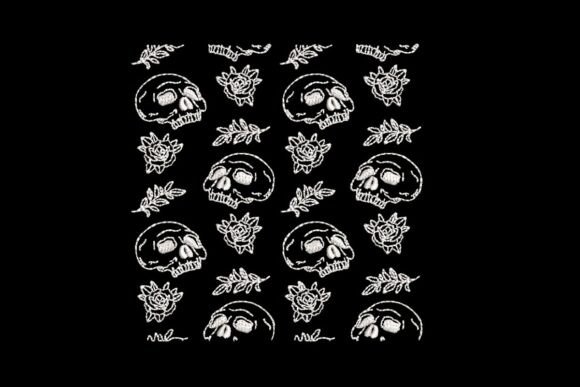
Gothic Skull and Rose Embroidery Pattern
First Impression: Bold, Elegant, and Unapologetically Gothic
As an embroidery designer who’s curated over 200 craft fair booths—and shipped thousands of handmade products—I opened the Gothic Skull and Rose Embroidery Pattern expecting drama. What I got was balance: a seamless repeating pattern that feels both timeless and trend-aware. The white-on-black palette reads instantly as premium—not spooky-costume Halloween, but refined gothic elegance. It’s not cutesy, not rustic, not minimalist. It’s decorative with intention: skulls rendered in three-quarters view carry dimension and character; roses bloom with stylized grace, not botanical fuss. This isn’t background filler—it’s a statement piece disguised as repetition.
Where It Shines on Craft Fair Products
The Gothic Skull and Rose Embroidery Pattern excels where contrast, clarity, and craftsmanship intersect. On black cotton tote bags? Striking—especially when stitched in matte white thread that catches light without glare. On structured aprons (think denim or heavy twill), it anchors the chest pocket area beautifully—neither too busy nor too sparse. For tea towel embroidery, the repeat works *only* if scaled to at least 4–5 inches wide per motif; smaller renders lose skull definition. As a cap design? Use caution—curved surfaces compress detail, so limit placement to flat panels like the front crown or side gusset.
Embroidered patches are where this pattern truly sings. Its clean outlines and balanced negative space translate flawlessly into sew-on or iron-on formats—ideal for jackets, denim vests, or market bag accents. Small fabric pouches (4"–6") benefit from a single centered motif rather than full repeat, preserving legibility. Pillow covers? Perfect at 8"–10" repeats across the face—adds instant boutique appeal without overwhelming texture. And for giftable handmade items—think velvet drawstring pouches or linen gift tags—the Gothic Skull and Rose Embroidery Pattern elevates perceived value before the buyer even touches the item.
Real-World Production & Selling Practicalities
This is not a “drop-in-and-stitch” machine embroidery design. Its alternating skull-and-rose rhythm demands attention to spacing and stitch density. Too tight, and white thread piles up on black fabric—causing puckering or stiffness. Too loose, and the repeat feels disconnected. Always test on scrap fabric matching your target product: black terry cloth towels behave very differently than smooth cotton poplin. Confirm hoop size compatibility early—some repeats stretch beyond standard 5x7" hoops, requiring repositioning or multi-hooping for larger items like pillow covers.
Photographing the Gothic Skull and Rose Embroidery Pattern for Etsy listings or printable mockups is highly effective—if lit well. White thread on black creates natural contrast, minimizing post-processing. But avoid harsh flash: it washes out subtle stitch texture. For booth displays, pair one embroidered tote bag with a framed A5 print of the digital embroidery file—this signals professionalism and invites questions about customization. Buyers consistently engage more when they see both the finished product *and* the design asset behind it.
Careful-Use Notes Every Designer Should Heed
- Dense areas: Skull eye sockets and rose centers may require reduced stitch count or underlay adjustment—check for thread buildup before batch production.
- Tiny details: Petal edges and skull cheekbone lines can blur on textured fabrics (like waffle-weave tea towels) or thick canvas. Simplify or enlarge slightly if needed.
- Dark fabric dependency: This pattern relies on high-contrast black backgrounds. Avoid sublimation or light-colored fabrics unless recolored intentionally—white-on-navy or charcoal won’t deliver the same impact.
- Scale sensitivity: Below 3 inches wide, the skull loses its three-quarter depth. Use cropped motifs—not scaled-down repeats—for small items like keychain patches or collar accents.
How It Strengthens Your Brand & Booth Presence
In a sea of farmhouse florals and boho mandalas, the Gothic Skull and Rose Embroidery Pattern stands out *without shouting*. It attracts a specific, loyal audience: goth-adjacent creatives, vintage lovers, tattoo-inspired shoppers, and collectors who appreciate dark romance. That focus boosts conversion—not just foot traffic. When displayed alongside complementary pieces (e.g., black linen napkins with subtle corner roses, or enamel pins echoing the skull profile), it builds cohesive brand storytelling. For Etsy sellers and small shop owners, bundling the digital embroidery file with physical products (e.g., “Stitched Tote + Digital File”) adds perceived value and cross-sells effortlessly.
Essential Embroidery Designer Checks Before You Produce
- Test the Gothic Skull and Rose Embroidery Pattern on your exact fabric type—thread tension shifts dramatically between cotton, linen, and blends.
- Verify thread contrast: matte polyester or rayon in true white (not off-white) delivers best results on black.
- Review spacing between motifs in the repeat—uneven gaps break visual rhythm and look unprofessional.
- Inspect stitch density in skull temples and rose calyxes—adjust underlay or reduce fill angles if stabilizer shows through.
- Use cutaway stabilizer for knits or stretchy fabrics; tear-away works well for stable wovens like quilting cotton.
- Create at least one real mockup—not just a digital preview—before committing to 50+ units.
- Compare how the pattern reads on black vs. deep charcoal or navy swatches—small color shifts affect mood significantly.
- Confirm commercial licensing terms before selling finished products—this is essential for Etsy sellers and wholesale partners.
The Gothic Skull and Rose Embroidery Pattern isn’t just another Halloween embroidery file. It’s a versatile, mood-driven design asset built for longevity—not seasonal disposal. When executed with intention, it transforms everyday handmade products into collectible pieces. For craft fair sellers, it’s booth gold: distinctive enough to stop scrollers, refined enough to justify premium pricing, and repeatable enough to scale without sacrificing quality. Just remember: respect the contrast, honor the detail, and always—*always*—test before you tote.