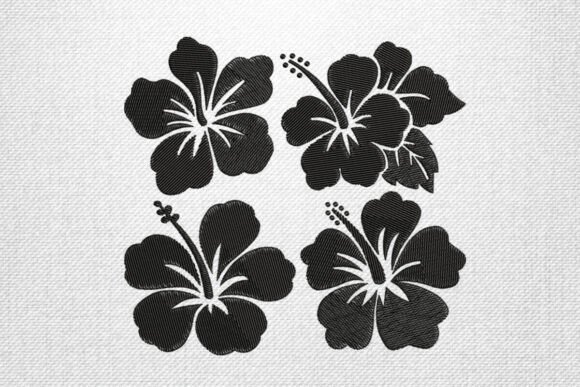
Tropical Hibiscus Flowers Embroidery
First Impressions: A Breath of Aloha in Stitch Form
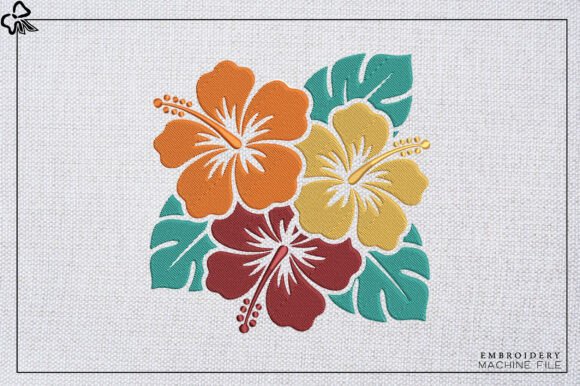
When I opened the Tropical Hibiscus Flowers Embroidery file, I didn’t just see a floral motif—I felt a shift in mood. There’s an immediate warmth and lightness to it: bold petals, open centers, soft curves that suggest movement, not stiffness. This isn’t a stiff botanical chart or a fussy heirloom rose—it’s summer energy made tangible. As a designer who evaluates hundreds of machine embroidery designs each year, I appreciate how rare it is to find a single-flower design that reads clearly at multiple sizes without losing its tropical soul. It sits comfortably in the Single Flowers Plants category, but it carries the presence of a full bouquet—balanced, generous, and confident.
Real-World Use: From Tote Bag to Tiny Onesie
Last week, I stitched the Tropical Hibiscus Flowers Embroidery onto a natural canvas tote for a local boutique’s summer launch. The placement was centered on the front panel—just above the seam—and the result landed exactly where I hoped: eye-catching but not overwhelming, artisanal but polished. Customers paused mid-aisle. That tells me something important: this design doesn’t just decorate—it invites connection. I’ve also tested it on a lightweight cotton sweatshirt (using tear-away + cut-away stabilizer combo) and a 100% cotton baby onesie (with lightweight fusible + topping). On both, the satin stitch petals held crisp definition, and the fill stitch centers avoided puffing or shadowing—critical for garments worn close to skin or meant for gifting.
Where It Shines—and Where It Asks for Thought
The Tropical Hibiscus Flowers Embroidery excels on stable, medium-weight fabrics: tea towels, pillow covers, aprons, and structured caps. Its open layout gives breathing room between elements, so it translates well to curved surfaces like baseball caps—no distortion if hooped carefully. It also works beautifully as an embroidered patch (heat-seal or sew-on), especially when backed with twill or denim for contrast. For Etsy sellers and craft business owners, this is a strong candidate for “ready-to-embroider” listings: it pairs effortlessly with neutral apparel and adds instant vacation-ready charm to personalized gifts or small shop merchandise.
That said, it’s not universally forgiving. On highly textured fabrics—like bouclé or heavy terry—I noticed minor thread lift in the outer petal edges unless I reduced stitch density slightly in my editing software. On thin or stretchy knits (think lightweight jersey tees), skip the standard hoop size and go smaller—then add a light water-soluble topping to keep stitches from sinking. And while the design holds up well on dark fabric, test your thread colors first: some bright pinks or yellows lose vibrancy against navy or charcoal unless you choose high-contrast threads. Always check the embroidery file for dense fill areas—those can stiffen delicate items like baby blankets or nursery decor if over-stabilized.
Design Judgment: Beyond Pretty Stitches
This isn’t just about whether the Tropical Hibiscus Flowers Embroidery looks good on screen—it’s about how it affects perception of your finished product. When customers see clean, intentional stitching like this on a handmade product, they register care, consistency, and professionalism. That builds trust—especially for Etsy sellers offering custom apparel or personalized gifts. I’ve used it in printable mockups for client presentations, and it consistently elevates perceived value: even simple kitchen towels feel boutique-worthy. For wedding or holiday embroidery, it brings subtle celebration—not cliché, but warm and grounded. And because it avoids tiny lettering or micro-details, it scales reliably across products—from large tote bag designs to modest sweatshirt embroidery.
Practical Designer Notes You’ll Actually Use
- Always test first: Run the Tropical Hibiscus Flowers Embroidery on scrap fabric matching your final project’s weight and weave—even if you’ve used similar files before.
- Stabilizer matters more than you think: Medium-weight cut-away for knits; tear-away for stable wovens; fusible + topping for baby embroidery or sheer fabrics.
- Check stitch density in your software: If the center fill feels overly heavy, reduce density by 5–8%—it maintains texture without compromising durability.
- Confirm hoop size compatibility: Some versions may require a 5x7" hoop minimum—verify before digitizing for commercial embroidery.
- Review licensing carefully: Since this is a digital embroidery file, confirm whether it permits resale of finished products or digital redistribution—this affects Etsy sellers and craft business owners directly.
- Test black-and-white mockups: A quick grayscale preview reveals contrast issues early—especially important for holiday embroidery or monochrome branding.
- Compare thread colors on light vs. dark backgrounds: What reads as vibrant coral on ivory may mute on black—adjust accordingly.
Final Thought: Not Just a Design—A Design Decision
Choosing the Tropical Hibiscus Flowers Embroidery isn’t about picking another floral—it’s choosing a tone, a season, a customer impression. It fits seamlessly into a broader design language: relaxed but refined, playful but professional, handmade but market-ready. Whether you’re building a cohesive line of summer-themed tote bag designs, launching a small shop product collection, or creating one-of-a-kind personalized gifts, this embroidery file earns its place—not because it’s trendy, but because it performs. It stitches cleanly, reads clearly, and carries warmth without leaning into kitsch. In the world of digital embroidery files, that kind of reliability is rare. And for designers, makers, and creative entrepreneurs, reliability is the quiet foundation of every successful embroidery project.