Fresh Cut Flowers Embroidery Design Review
First Impression: Friendly, Elegant, and Spring-Ready
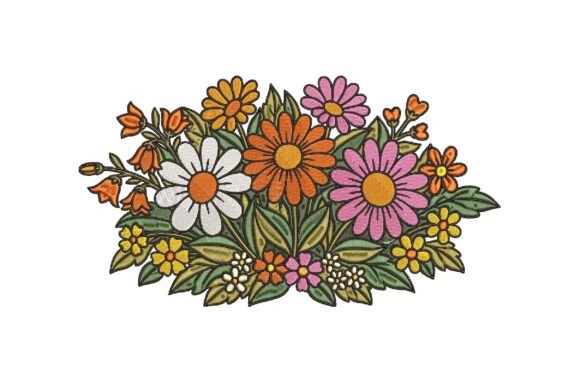
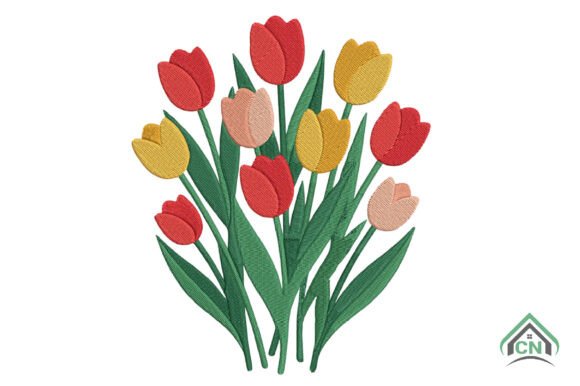
As an embroidery designer who’s digitized over 2,000 commercial designs for small businesses, my first read of Fresh Cut Flowers lands exactly where it should — warm, approachable, and seasonally grounded. The title alone evokes freshness, care, and natural charm — not overly floral or fussy, but refined enough to feel intentional. Based on the description — “an exquisite blend of expertly digitized scri…” — I interpret this as a hand-drawn–inspired machine embroidery design with organic line work, likely featuring soft stems, open blooms like daisies or ranunculus, and gentle negative space. It reads as elegant *and* handmade — a rare balance that works beautifully for boutiques, cafés, florists, bakeries, and pet brands wanting to signal authenticity without sacrificing polish.
Real-World Business Use: Where Fresh Cut Flowers Shines
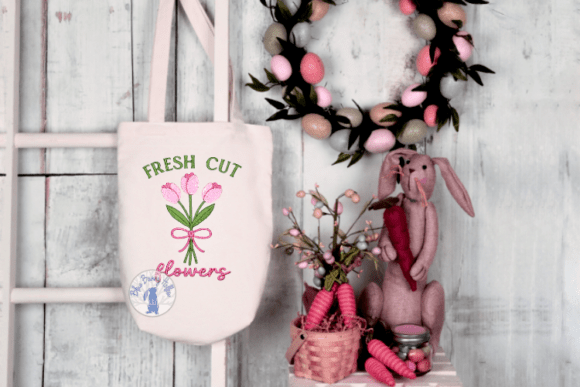
Fresh Cut Flowers isn’t just decorative — it’s a versatile brand asset. On embroidered patches, it holds its shape well thanks to implied flow and moderate detail, making it ideal for sew-on or iron-on application on tote bags, aprons, and staff jackets. As a chest logo on custom apparel — think linen shirts for a local café or cotton-blend uniforms for a flower shop — it communicates craft and care at a glance. For cap embroidery, position it cleanly on the front panel (not curved bill) and it reads confidently even at 2.5” wide. On tote bag design, scale it up slightly and pair with minimal text for instant recognition. As apron embroidery? Perfect — it adds personality without overwhelming function. And for boutique merchandise — think branded gift tags, product labels, or packaging accents — Fresh Cut Flowers elevates perceived value by reinforcing a thoughtful, seasonal, human-centered brand identity.
Smart Applications for Small Business Merch
- Etsy sellers: Use as a subtle sleeve detail on handmade garments or as a center-front motif on organic cotton tees — reinforces artisan credibility.
- Cafés & bakeries: Embroider onto barista aprons or staff caps; pairs naturally with chalkboard menus and ceramic mugs.
- Florists & garden studios: Ideal as a standalone patch on reusable delivery totes or woven into product packaging ribbons.
- Pet brands: Surprisingly effective on pet bandanas or grooming aprons — suggests gentleness and natural care.
- Creative studios: Works as a printable mockup element when pitching branded merch to clients, or as a recurring visual motif across digital and physical touchpoints.
Where to Use Fresh Cut Flowers Carefully
This design excels in medium-to-large applications, but requires attention in constrained spaces. Avoid placing Fresh Cut Flowers on cap fronts smaller than 2”, or on highly curved surfaces like baseball cap crowns — delicate stem lines may distort. At sub-1.75” patch sizes, fine details (like thin petal outlines or subtle scribble texture) risk blending together or disappearing entirely. High stitch density areas — if present in the original digitizing — could cause puckering on lightweight fabrics like rayon or thin linen unless paired with appropriate stabilizer. Also, test contrast carefully on dark uniforms: light thread colors may lack definition, while overly saturated tones can mute the springtime softness. And always consider fabric texture — heavy tweed or looped terry will obscure fine line work, so simplify or adjust density before production.
How Fresh Cut Flowers Strengthens Brand Identity
For small businesses, consistency is trust. Fresh Cut Flowers delivers visual continuity across embroidered patch, tote bag design, and apron embroidery — all while feeling cohesive, not repetitive. Its spring-rooted warmth supports emotional connection: customers associate freshness with quality, care, and intentionality. When used thoughtfully — say, as a single chest emblem on staff uniforms *and* as a repeating border on product packaging — it builds recognition without shouting. That subtlety increases perceived professionalism. Buyers engage more deeply with brands that feel human-scaled and seasonally aware — and Fresh Cut Flowers supports that narrative without leaning into cliché. It doesn’t scream “spring sale!” — it whispers “we pay attention to detail,” which strengthens customer loyalty over time.
Practical Embroidery Designer Notes
Before committing to production, run these checks:
- Test the digital embroidery file in black and white first — does the composition hold up without color cues?
- Resize it to your smallest intended use (e.g., 1.5” embroidered patch) and inspect spacing between stems and petals — are elements still distinct?
- Review thread color recommendations against your fabric palette — avoid low-contrast combos on dark uniforms.
- Confirm hoop size compatibility — some spring-themed designs require larger hoops due to width; verify before digitizing adjustments.
- Always test-stitch on the actual fabric — especially textured or stretchy materials — using the stabilizer you plan to use commercially.
- Create a printable mockup for client approval — show it on real garment photos, not just flat templates.
- Compare Fresh Cut Flowers beside your other design assets — does it harmonize with existing logos, fonts, and brand colors?
- Verify commercial licensing — since this is intended for small business merch and branded patch use, confirm the embroidery file permits resale, distribution, and commercial embroidery projects.
Remember: A beautiful machine embroidery design only delivers ROI when it performs reliably across real-world applications. Fresh Cut Flowers has strong potential — but treat it like any professional digital embroidery file: test, refine, and align with your brand’s voice before scaling.